Tuesday, January 20, 2015

you say tomato, i say tomato


"The hours when the mind is absorbed by beauty are the only hours we live." Richard Jeffers, 1884.

You would think that in my quest for beauty, I would be a treasure chest. My skin would sparkle with diamonds; my hands, cupped together, would barely maintain the waterfall of pearls, posies, and poetry. My mouth open would reveal a rising tide at sunset. 

But instead, my quest finds me still. I sit on my broken ottoman with a dinged up and rusty pail, watching. My cabinet of curiosities is made up of broken shells, glass animals and flattened pennies. I catalogue everything, keeping lists of the perfect words you subconsciously spill, reclined on my roof at midnight. I keep the ticket to the event that we almost went to when you still had mystery. I keep my hope tightly squished in a cheap old jewelry box I got for Christmas seven years ago. 


I would like to think that when I was younger, I believed in a muse. That whole romantic notion of artist and muse, inspiration incarnate, a person to respond to, to reflect upon, to return that gift of beauty, understandably could define the making of art. I had thought that until you had that kind of dialogue, you simply weren't able to produce. There was no reason to. After all, if a tree falls.... I had thought, until the other day, that I had given up that ghost. I am alone. I have no one to have a push-pull with, and yet I have to produce. I can't help it. It's my breath. 

Have I been waiting my whole life, stock piling my own beauty as a type of dowry? Am I still waiting for that person to come and take it all? Or am I more of a Miss Havisham, and this is my wedding table?

"First of all, love is a joint experience between two persons - but the fact is a joint experience does not mean that it is a similar experience to the two involved. There are the lover and the beloved, but these two come from different countries." Carson McCullers.

"     The remedy for loneliness
is in learning to admit
solitude as one admits
the bayonet: gracefully
now that already
it pierces the heart."
Denis Johnson.


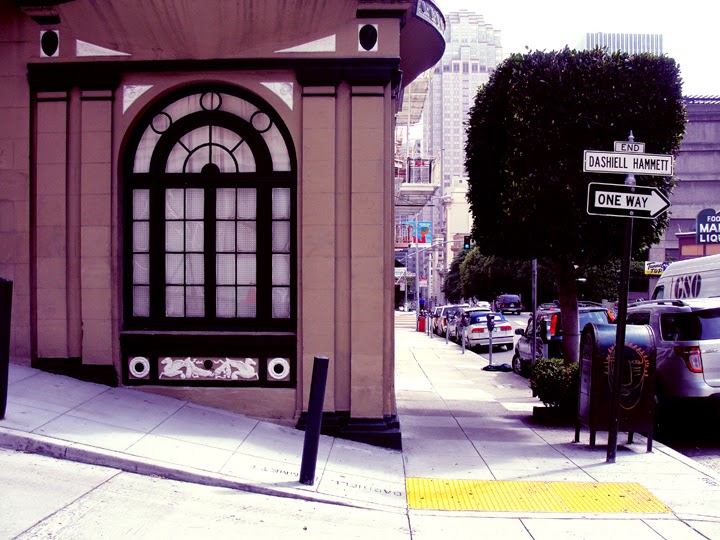
And so, I walk the streets of San Francisco, keeping sacred the little glimpses of this treasure chest. This morning, I found the secret doors that justify the need for fairy-tales. I count the windows on my block of service bedrooms. Are those actual stained glass windows or cheaply painted glass? Does it matter either way?
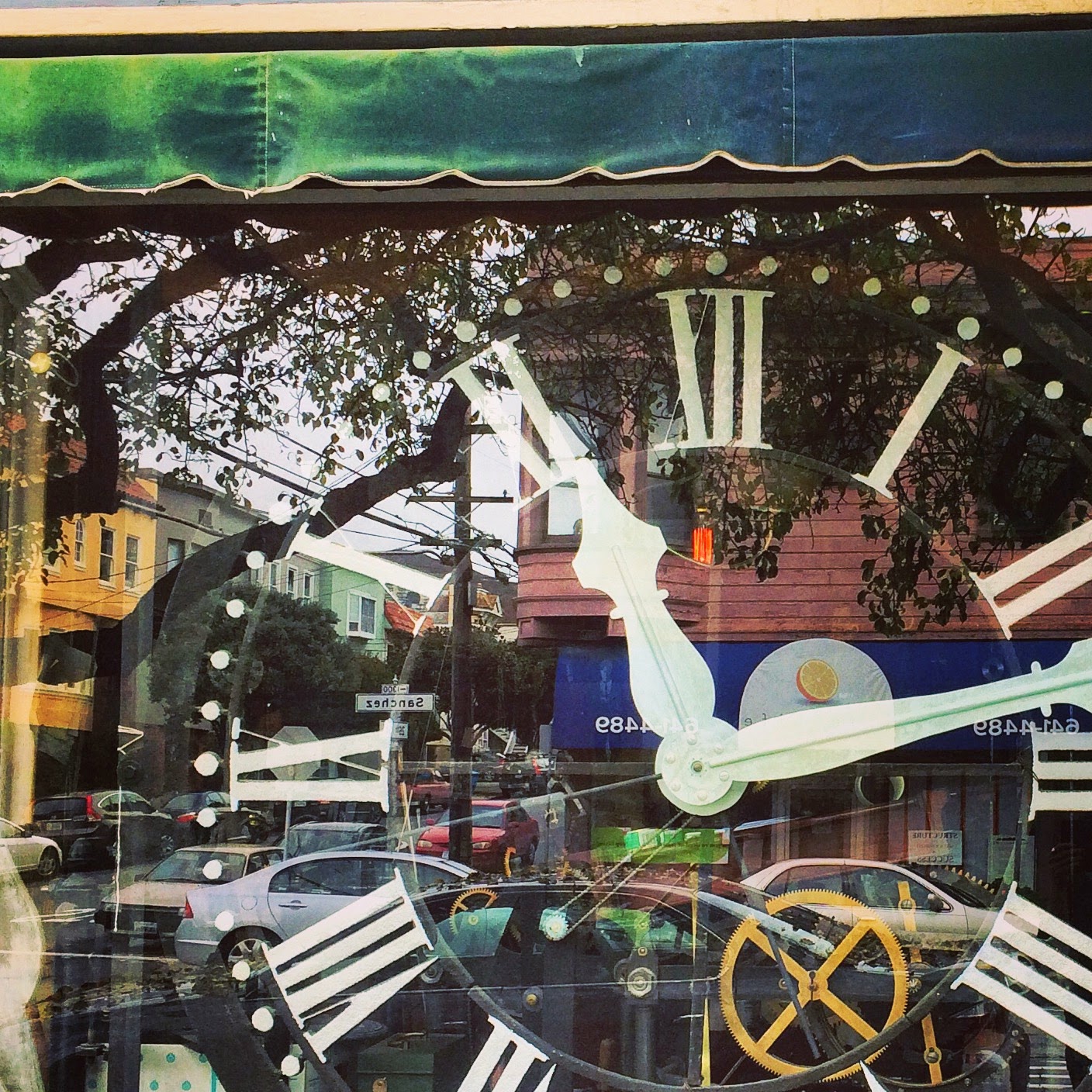
As we all know, I like my ornamentation. February marks the one hundred year anniversary of the Panama Pacific International Exposition, in case you haven't heard, which has me all a-flutter. Daniel Burnham, the genius behind the City Beautiful movement prior to the expo, had designed a new San Francisco, one that would rival Paris.  His plan involved great boulevards cutting through the city's existing grid, converging in a 'spider-web' like central axis. He designed a magnificent city center, making the city designate 1/3 of its land for parks and gardens with grand structures set atop the hills to commemorate our pioneers. And though he had the city's support to make this happen, the earthquake leveled the city, and his vision of beauty was bulldozed by private business.

According to SF Gate, "San Francisco's most tantalizing 'what-if' after the 1906 earthquake came when civic leaders turned their backs on one of the most ambitious plans ever crafted for an American city."

The forever naysayer Chronicle said, "We may allow visions of the beautiful to dance before our eyes, but we must not permit them to control our actions."

Nevertheless, beauty did manage to reign supreme, and in preparation for the PPIE, Edward Bennett got to work. He wanted to create a walled city, mimicking the Mediterranean and Asia, using the colors of San Francisco as his palette. "I saw the vibrant tint of the native wild flowers, the soft brown of the surrounding hills, the gold of the orangeries, the blue of the sea, and I determined that, just as a musician builds his symphony around a motif or chord, so I must strike a chord of color, and build my symphony on this."

As the PPIE opened, everyone knew it was to be dismantled later. Phoebe Hearst thought that was stupid, and created the Palace Preservation League to protect the Palace of Fine Arts, the only relic of such ambition. In my pale and dinged up little bucket are traces of these old buildings. They perched on our city like little stones in some woman's ring. They are the colors of our hills, the shadows of our clouds, architecture directly in correspondence with its place. Are they therefore beautiful because they had to be dismantled, made precious by their own mortality? Would we cherish them in the same way should they be commonplace?

Ambrose Bierce, "Belladonna: In Italian, a beautiful lady; in English a deadly poison. A striking example of the essential identity of the two tongues."

A few weeks ago, my date took me to the Legion of Honor up in Lincoln Park. This park used to be the Golden Gate cemetery, until purchased in 1908. Sadly, coffins and bodies were still discovered during a retrofit in the 1990s. Nevertheless, Alma de Bretteville Spreckles (of the statue in Union Square) needed a place to house her Rodin. According to Adolph, "it was the purpose of my wife and myself to contribute to the beautification of our native city something not only beautiful in itself, but also something devoted to patriotic and useful ends: which might be dedicated as a suitable memorial to our brave boys who gave their lives to their country in the Great War."


In the Dream Endures: California enters the 1940s, by Kevin Starr, "It took only one patron, however, Alma de Bretteville Spreckles, to get the city into the museum business. Then in her fifties, Alma... deserves a novel, an opera even, capable of reflecting the will, the self-determination, the self-invention of a displaced aristocrat, an artists' model, lush and Rubenesque in the style of the fin de siecle, who used her sexual magnetism to parlay her way back into the upper class, if not quite to the respectability that ever eluded her."


It opened on Armistice Day in 1924, "to honor the dead while serving the living". It was dedicated to the 3600 California men who died in battle. 

FYI: This ostentatious building has been featured in Hitchcock's Vertigo, was the sight of the eminent demise of Norman Neal Williams in Maupin's Tales of the City, and offered an office to Dr. Crippen in the Maltese Falcon. The plaza and fountain out front is America's first road to ever be improved for cars. 

Last night, while drinking wine of the roof, we got to talking about reincarnation and spirituality. 


Bierce again, "Heaven: a place where the wicked cease from troubling you with talk of their personal affairs and the good listen with attention while you expand on your own."

Bear with me on this. Having been raised atheist, I was taught that when we die, we die. We are nothing after. And yet, as I keep saying, there is the past all around us. Things continue, they change, they evolve. Maybe I am incorrect in thinking that I don't have a muse, mistaking a muse as being of the human variety. Perhaps I am just like the Spreckles and Burnham, giving my heart to this city. Or maybe I am just doing what I do in this point of time, another butterfly wing flapping in a third floor walk-up. How, then, can I address this sorrow I feel? When I eat dinner with my friends, I feel justified, appeased. Alone, I dance like a fool with a paintbrush between my teeth. Where is the lack? My pale and dinged up bucket is overflowing with failed attempts at lace making and torn stockings, pressed two dollar bills and lost socks; my increasingly bizarre collection of beauty.

In the Arsonist's Guide to Writers' Homes in New England, Brock Clarke wrote, "If sadness were a competitive event, I'd have broken the subdivisional record. Sometimes when you're sad - you have to sit around and wait for your sadness to turn into something else, which it surely will. Sadness is in this way being like coal or most sorts of larvae."

Normally, I adore sorrow. Bad days are lovely, in that they are rare enough to serve purely as reminders of just how much I love my life. I love listening to the blues and taking long walks, and holding my breath, careful to keep the sacred protected within me. But lately, this sorrow just won't quit. I fear the fate of Turgenev: he quit writing when he fell out of love and subsequently died. "I am too old to be in love and unless I am a little in love, I cannot write."
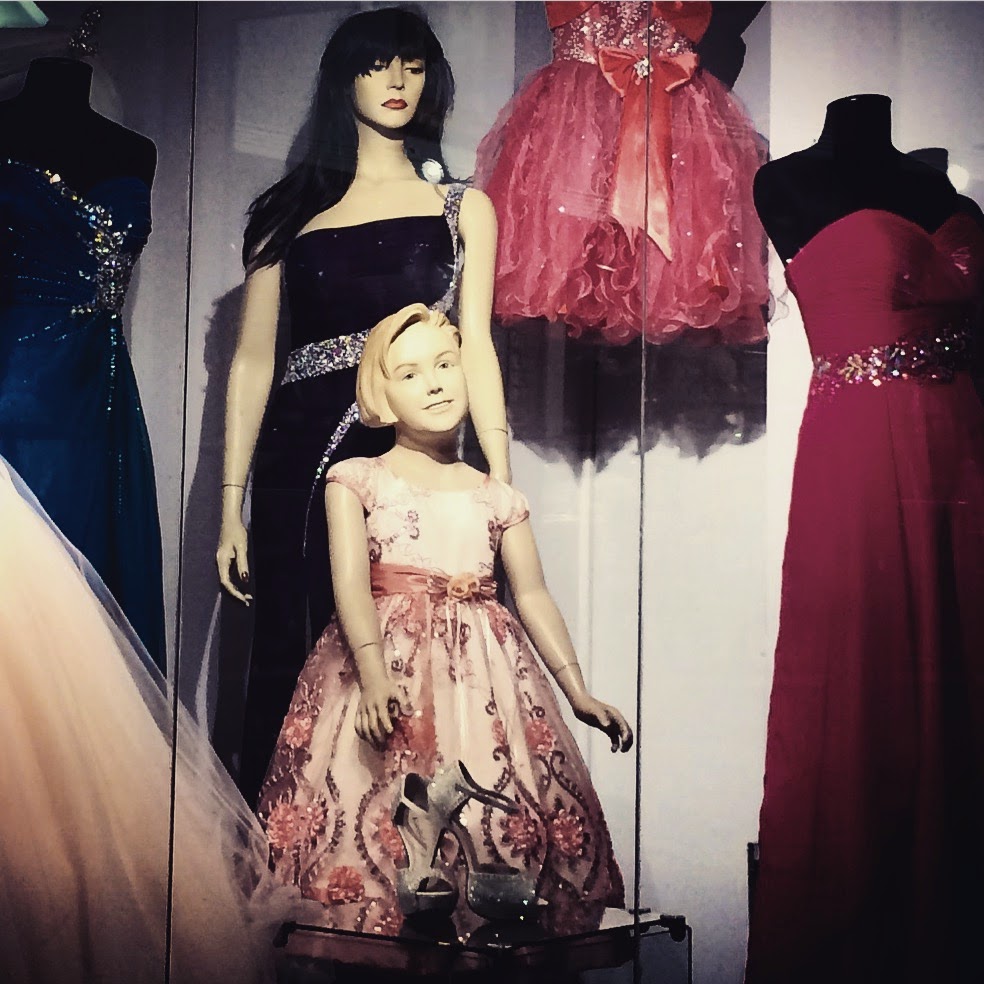
And then there's the alternative. I could get back on that saddle and reach for the glory, but as my favorite little dating guide from the 1940s reminds us, "No girl wants to be treated like a caged animal by a circus clown," and we all know that that's usually how the dating world goes.

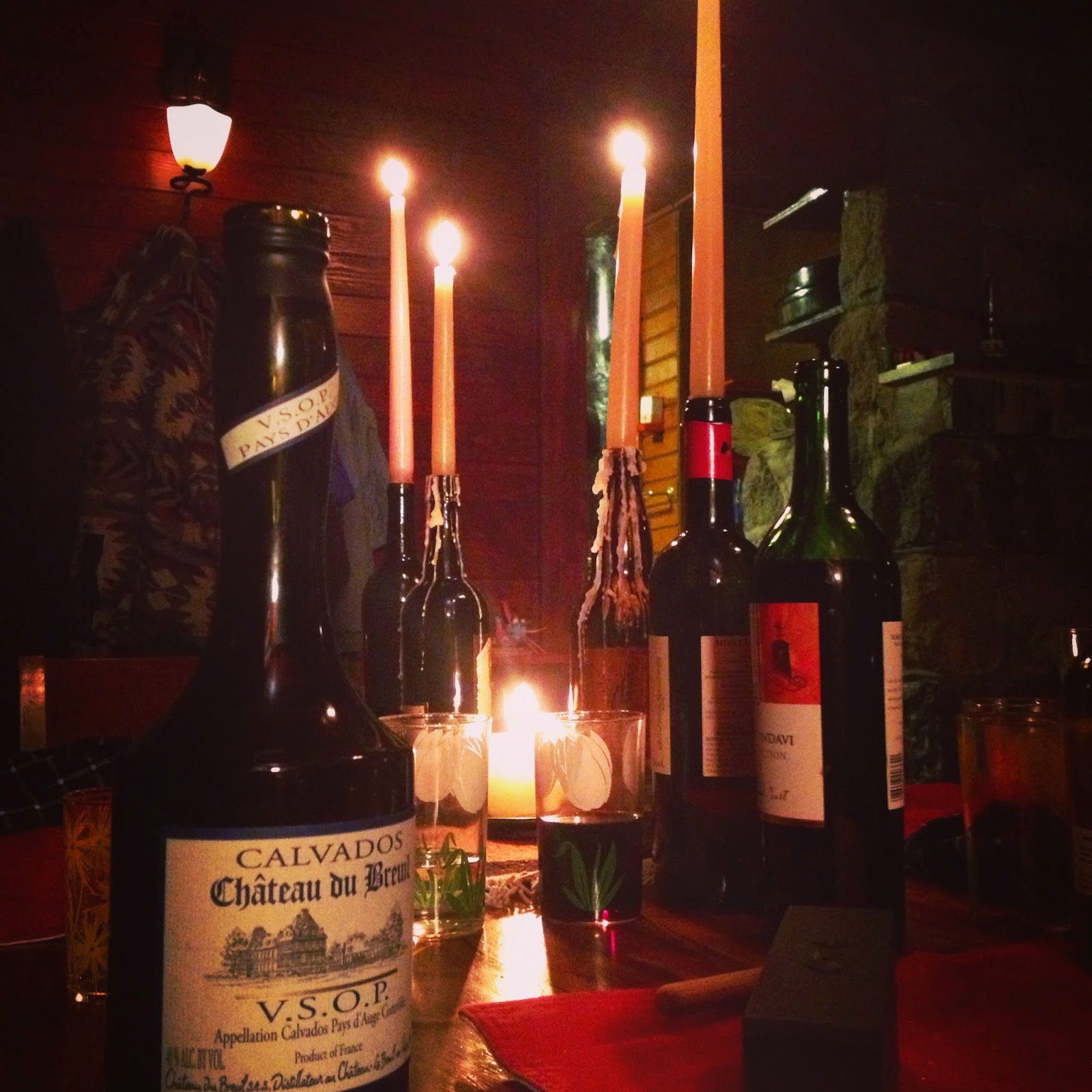
I think I'll take Martin Luther's words as advice. "Whenever the devil harasses you, seek the company of men or drink more, or joke and talk nonsense, or do some other merry thing... so when the devil says to you, do not drink, answer him: I will drink and right freely, just because you tell me not to."

A tiny glimpse from inside my pale and dinged up little bucket:


Thursday, December 11, 2014

mares' tails and mackerel skies


"rainbow to windward, foul fall the day,
rainbow to leeward, rain runs away."
(a sailor's rhyme)

The other day, I had the good fortune of having drinks with this really cute dude who the bartender happened to describe as being "stuck in the horse latitudes". Come again?

According to my beloved Illustrated Encyclopedia from 1983, The horse latitudes refer to "Either of the two belts of latitudes located mostly over the oceans at about  30 to 35° north and south, having high barometric pressure, calms, light changeable winds, and fine weather."

There are two legends. The first details the economic peril of sailors, who, having been paid once for their journey, had the tendency to blow all their money at once, forcing them to become indebted to the captain; debt here becoming synonymous with 'dead horse'. Once they managed to pay the captain off, the sailors would make a fake horse, celebrate, and then throw it overboard.

Why would they chuck the horses? Well, the second legend says that historically, in these parts of the world, ships tended to lose momentum, making it difficult to keep hydrated their horse cargo. Once dead, these horses were tossed.


As is the case with most things ocean-oriented, the mystery continues. Having read an article trying to ascertain the origin of the term, it cited Edward Taube, from 1967. He claimed that at the end of the 17th century, "A ship that was horsed was being carried along by a strong current or tide, like a rider on horseback. He suggested that, in an area of light winds such as that found south of the Azores, currents would control the movement of the ship and the term might have been transformed to the location."

A1552 account named the area between the Canaries and Spain, El Golfo de las Yeguas, because many horses died at sea there.

In a letter from Clark Russell to Lady Maud, he wrote, "Nothing could have been more delightful that our run into the horse latitudes. Gales and dead calms, terrible thunderstorms and breezes, fair one hour and foul the next, are the characteristics of these parallels."


Because of our epic storm, I've been inside reading (surprise surprise). I couldn't quite understand why this particular person was described as suffering from this fate, but I like the idea Taube brought up, of a ship being 'horsed', almost like being tugged.

Michelangelo's Night
Naturally, that lead me to look up the history and symbolism of the chariot. Though rife with conflicting meanings, I like the Hindu belief, one that is similar to Jung. "The charioteer (thought) uses the reins (willpower and intelligence) to master the steeds (life force), tugging the chariot (the body)." 

My Dictionary of Symbols described how all chariots differ in color and shape, and the animals that lead are dependent on the characteristic of the rein-holders. Apollo gets white horses, Dionysus has panthers, tigers or leopards. Rhea/Cybele: lions; Artemis/Diana: stags; Hera/Juno: peacocks; Poseidon/Neptune: sea horses; Hades/Pluto black horses; Aphrodite/Venus: doves or swans.

Nyx, the goddess of night and the mother of the fates, is dragged on a chariot led by black horses, bats or owls. 

What does any of this have to do with San Francisco? 
Obviously, our city is too young to have a history of overlords wheeling down Market Street in a chariot made of gold, but like the nature of the chariot, we have an extensive history of things pulling other things; namely, the tugboat. 
Having been the leading whaling city in the country in the 1880s, not to mention the magnitude of the Gold Rush, the Golden Gate has seen its fair share of ships and subsequent wrecks.

Three notable ship wreck stories I read last night included King Phillip, the explosive Yosemite, and the little tugboat that couldn't, Rescue. 

remains of King Phillip
King Phillip wrecked in 1878 and was tugged to Ocean Beach where it promptly sank into the sand. Having been buried all this time, it was chiefly forgotten, that is until 1983, when it miraculously re-appeared. It turns out that nearly half of the vessel was still in tact! Sadly, when the city built the sewage system, it got buried again for another 22 years, until re-discovered again in 2010.  

Yosemite was a cargo boat tugging 25 tons of dynamite. In 1926, it sent a distress call to the nearby schooner Willamette, safely rescuing its crew. As the boat was being tugged, again, to Ocean Beach, it broke free and smashed into a million bits against the Cliff House. Families came to visit and take selfies for weeks after.

Rescue is a sad little fella, having wrecked in 1874. "Though it was built to rescue other boats, it was not able to rescue itself after it struck rocks in a dense fog. A pleasure passenger, Thomas Markey, was swept into the ocean. His body has never been recovered."

The most remarkable of all ship wrecks is the leading maritime mystery, the Bay Area's own Titanic. In 1901, Rio de Janeiro was sailing into the Golden Gate when it hit a rock while blinded by the permeating fog. Only 79 passengers of the 201 on board were saved. The ship sank immediately. 

According to one account at the time: "There was not much confusion until fifteen minutes after striking, the bow of the vessel suddenly plunged underwater. Then there was a wild rush for the boats. A thick fog enveloped everything and as yet no sign had come from the life-saving station. Darkness was all about and with this added horror the people on the Rio had to cope."

Ironically enough, in an article put out by SFGate this morning, El Rio has been discovered! 
But not without a bitter conclusion. Robert Schwemmer, Maritime Heritage Coordinator, said, "Many of these people were about to start a new life in a new country. They were only perhaps an hour away from the dock in San Francisco. That is something to think about."

Rio de Janeiro
But enough about ships! Let's talk storms!

In re-reading Dracula, I came across this passage. 
"The day was unusually fine till the afternoon, when some of the gossips who frequent the East Cliff churchyard, and from the commanding eminence watch the wide sweep of the sea visible to the north and east called attention to a sudden show of 'mare's tails' high in the sky to the northwest. The wind was then blowing from the southwest in the mild degree which in barometrical language is ranked 'No.2 light breeze.'"

First horse latitudes and now mare's tails? 
Obviously, I looked it up. 

Mare's Tails and Mackerel Skies are clouds. Mackerel Skies refer to Cirro-cumulus clouds. According to the Landfall website, they "develop from cirrus clouds beginning to lower and clump together. Due to their relatively high altitude, they have a dappled look and a silvery sheen."

Mare's Tails, on the other hand, are basic cirrus clouds and the long-term weather forecasting cloud, "because they are formed by a thin layer of ice crystals. [It's] responsible for a blue sky gradually turning into a milky haze and thickening or 'lowering' weather."

Those clouds that are big, boxy, dark on the bottom and bright at the top? That's the Blacksmith's Anvil, or cumulo-nimbus. 


"Then without warning the tempest broke, with a rapidity which, at the time, seemed incredible and even afterwards as impossible to realize, the whole aspect of nature at once became convulsed - the waves rose in growing fury, each overtopping its fellow, till a very few minutes the lately glassy sea was like a roaring and devouring monster." (Stoker)

Clearly, our storm is nothing in comparison.
Strangely enough, there is such a thing as a California Hurricane or a tropical cyclone. We've had our fair share history of them in the Golden Gate. In July of 1992, Hurricane Darby caused such cloudiness in California that the Space Shuttle Columbia had to detour to Florida. Our deadliest storm has gone un-named, but in 1939, somewhere between 45 and 93 people died. Whoa.

Last night, as I practiced my new cloud knowledge, I noticed that every house had its lights on, modern lighthouses all confronting whatever fate spilled from the hills.

"The worst part was that the rain was affecting everything and the driest machines would have flowers popping out among their gears if they were not oiled every three days, and the threads in brocades rusted, and wet clothing would break out in a rush of saffron-colored moss. The air was so damp that fish could have come in through the doors and swam out the windows, floating through the atmosphere in the rooms." (Gabriel Garcia Marquez).

And finally, from the collection of poems titled Horse Latitudes, by Paul Muldoon:
"Those weeks and months in the doldrums
Coming back as he ran her thumb
along an old Venetian blind
in the hope that something might come to mind,
that he might yet animadvert
the maiden name of that Iron Maiden
on which he was drawing a blank."


Friday, November 28, 2014

you are all a lost generation


...or so said Gertrude Stein.

Finding Beauty, by Lance Linder

Do not go in there, do not enter, do not venture.
For venturers have been known never to return.
Who knows what they found,
If they found anything.

If they found beauty, would they tell it?
Would they remember the radiance
When the light broke the fern, splitting the fronds
Into tendrilled rays of green becoming white.
White becoming a sear on the innermost wound.
A wound that had lost love blood much too long.
A long that stretched so far.
So far that the tail became the leading wave
Of a returning tide of light.


With a sketchbook full of chandelier drawings, a mind full of Hemingway and a bag full of champagne flutes, I boarded the plane to take me home. It was a surprise visit for my great friend Christopher's 40th birthday, as well as a celebration of his engagement. A tad nervous to be expanding my social comfort level, not to mention trying to remember what it was like living in a cold, wet climate, I decided to tuck away the fears and to let myself be as open and absorbent as a sponge.

But here I am, getting ahead of myself again. 

If you've had a conversation with me over the past few weeks, you will know that I have found myself completely obsessed with the time of roughly 1880-1930, and how the cultural and artistic responses to such a rapidly changing world seem applicable today. If you've ever had a conversation with me, you will also know that I'm constantly looking for that thread that keeps us all connected, a thread that goes beyond time and place, the human connection.

A little back story. Before 1900, there was the general feeling that the world was ending. Too much was changing too quickly, and instead of fearing the end, these people decided to go out with a bang, or rather in a massive explosion of sparkling lights and peacock feathers. There was a massive pursuit of beauty, of art for art's sake.

According to Wikipedia, the fin de siecle (French concept of the end of the century) was a term used to describe "the closing and onset of an era, as the end of the 19th century was felt to be a period of degeneration, but at the same time a period of hope for a new beginning. The 'spirit' of fin de siecle often refers to the cultural hallmarks that were recognized as prominent in the 1880s and 1890s, including 'ennui', 'cynicism', 'pessimism', and '...a widespread belief that civilization leads to decadence.'"


For me, these sensations are starting to feel redundant. With the massive growing in San Francisco, the old Victorians are being torn down for these quick, cheap and hideous apartment towers. Beautiful places are vanishing and being replaced by homogenized garbage, and the locals are furious. Well, let's get out of our own poopy-pants and look at the bigger picture. This is happening everywhere. As we all talk, culture as we know it, is dying, or, as I am desperate to maintain, changing.  

During the Aesthetic Movement of the same era, Walter Pater stated, "While all melts under our feet, we may well grasp at any exquisite passion, or any contribution to knowledge that seems by a lifted horizon to set the spirit free for a moment, or any stirring of the senses, strange dyes, strange colours, and curious odours, or the work of the artist's hands, in the face of one's friend."

But hear me out. I am Whitney Sanford. I was raised in the waste not, want not mentality. Decadence was, at best, unnecessary, and at worse (I'm hearing Papaw's voice right now) disgraceful. And then I lived with the punks, forever, who frowned and shouted at excessive loveliness, at the bourgeois backbone of aesthetics. Then it was art school, and the whole debate that beauty is no longer relevant, that we live in a truly ugly world, that even making an actual object of art was counter-productive and antiquated.

Well, you know what? I'm sick of all of that. Livid, in fact. How have I allowed myself to be subjected to this self-efacing, hope-annihilating view for thirty five years?

"Beauty has as many meanings as man has moods. Beauty is the symbol of symbols. Beauty reveals everything because it expresses nothing. When it shows itself, it shows us the whole fiery-coloured world." -Oscar Wilde


In the Sun Also Rises (Hemingway wasn't a part of the Aesthetic Movement but of the Lost Generation of 1920, another generation I'm equally fascinated by at the moment), he wrote, "I thought I had paid for everything. Not like the woman pays and pays and pays. No idea of retribution or punishment. Just exchange of values. You gave up something and got something else. Or you worked for something. You paid some way for everything that was any good. I paid my way into enough things that I liked, so that I had a good time. Either you paid by learning about them, or by experience, or by taking chances, or by money. Enjoying living was learning to get your money's worth and knowing when you had it. You could get your money's worth. The world was a good place to buy in. It seemed like a fine philosophy. In five years, I thought, it will seem just as silly as all the other fine philosophies I've had."


In the Lost Generation (are you catching onto my theme yet?) the term 'lost' doesn't refer to missing, or vanished, but disoriented, wandering and directionless, "a recognition that there was great confusion and aimlessness among the war's survivors in the early post-war years."


Full to the point of overflowing, I followed her headlight carefully down moss covered stairs in the rain, to a cabin without power. Our first night was to be just the three of us. We quickly opened champagne, changed our shoes for cabin slippers, and set a fire.


In my innermost dreams, I hope to find myself living in a pretty land. It is never decadent, by our standards, but decadent in its own right. I'm not sure when the moment happened, but early on I was bit by the modernist bug. I wanted to live the life of Henry Miller (perhaps a bit less perverted), of Fitzgerald. I wanted to linger for hours in the cafe, engaging with the continuously changing tide of visitors. I wanted to be dragged to strange parties in unfamiliar houses with eccentric weirdos nonchalantly blabbing some life-changing truth over a big glass of something. I wanted the halo of smoke, the bare bulb, the lone kitchen table, impossible to access because of the plethora of chairs and the never silent mass of bodies.


When I was leaving Portland, I decided to kind of slip out. I told just a few people about my secret last night. Somehow, though I had managed to have all those aforementioned experiences during my time there, I didn't have this one evening.  I'm not sure how it got the name "Russian drinking circle", as that wasn't the point at all. In my vision, I wanted the table, the bulb, the record player scratching in the background. I hoped some lucky couple would be making out on the crappy sofa covered in a rugged blanket, another couple fighting, someone rushing in long enough to borrow money and disappear again, someone else to crash the party, the unwanted visitor. 

I got all that and more. In fact, the part about it being a "Russian Drinking Circle" confused all those invited. Some came dressed as Russian peasants from the 1700s. My sister wore an evening gown. We drank tequila.

In San Francisco, my friends here are perhaps a bit too busy to play these silly games with me. The Attic was a close alternative, though with a punk spin. I'm also reluctantly coming to terms with that most of my fellow San Franciscans simply can't live the life of leisure like me, resulting in fewer and fewer hours available to read, to argue ideas, to conceptualize. Having resigned myself to spending this other part of my life alone, I was shocked to find the opposite true.

In this cabin by the ZigZag river, I was given one of the two presents I've always wanted, this experience. We were a party of chefs, writers, artists, artist models, and musicians. There was a never ending supply of incredible food and fancy drink, conversation. There was the dance party in the corner, Miles Davis on the stereo, the rain never ceasing. The sound of the river was louder than the traffic on 26th street, without the sirens. And our first night, without power, could easily have been a picture from a century ago.

While contemplating this, the next morning, another thought came to me. Somehow, for me, beauty and love are linked, and perhaps because I've felt pressured to reject beauty, I've been unable to find love. That maybe in me finally letting myself off the hook to produce bigger, think bigger, think newer, I'd find that thread that kept us together. 

When Cerissa woke up, I was telling her all this. The reason the cabin is in their family is because her father is a poet and this is his writer's retreat. In one bookcase, there were ten books, all hand bound, making up a series of work, and next to that was a very small booklet called, Finding Beauty. She said that this was his work relating to exactly what I was feeling. 

Lance LInder,
Wander if you must.
Move in layers if that be your memory.
Come between the seeker and the shore.
Be the cloak that gives the answer its shadow.
Be the beauty of a blanket
On the rune scratched stones.

But the story went further. This cabin was also the location of Hannah and Kai's wedding a year or so prior. Their father had made of the land a love-paradise. A small rock path led you to the river to a cairn (those rock piles you see at the ocean). In fact, there were multiple cairn's and according to the wedding book their father made, each referred to a different kind of love. The heaven cairn, "is built as high as possible. The higher it gets, the more unstable it becomes. It illustrates the futility of seeking heaven by going ever higher."

The path leads you to the wedding hut, a little cave made of twigs and moss where each person is to sit separate and think of the love they have to offer and the love they'd like to take. 

The river rushed and swallowed. The snow fell lightly and the fire raged. 

I have been incapable of love because I have been lying to my own heart. 

In the Arsonist's Guide to Writer's Homes in New England, Brock Clarke wrote, "I had this unoriginal thought as I walked out the door and toward my van: love changes us, makes us into people whom others then want to love. That's why, to those of us without it, love is the voice asking, what else? what else?  And to those of us who have had love and lost it or thrown it away, then love is the voice that leads us back to love, to see if it might still be ours or if we've lost it for good. For those of us who've lost it, love is also the thing that makes us speak in aphorisms about love, which is why we try to get love back, so we can stop speaking that way. Aphoristically, that is." 


Winter has arrived, and it's time to clean out the cobwebs, to replace the sundresses with sweaters. I'm packing up the cynicism, the superficiality, the nonsensical gaiety for everything more. I'll be the conductor of my own brass band, meant to follow me everywhere. I will lay flowers and ribbons and feathers on the altar of everything worth remembering. I will feed it coconut and dark chocolate. 

Charles Algernon Swinburne:
Behind the veil, forbidden.
Shut up from sight,
Love, is there sorrow hidden,
Is there delight?

I cannot see what pleasures
or what pains were;
What pale new loves and treasures
New years will bear;
What beam will fall, what shower
What grief or joy or dower;
But one thing knows the flower, the flower is fair.

Consider this a call to arms, for all things good. As the world, like sand, keeps falling between our fingers, ungraspable, perhaps we need to learn to hold our hands flat, open, palms up. Maybe something will stick.


"After a fashion, it is no doubt a decadence; it has all the qualities that mark the end of a great period, the qualities that we find in the Greek, the Latin decadence, an intense self-consciousness, a restless curiosity in research, an over-subtlising refinement upon refinement, a spiritual and moral perversity" Arthur Symons.


As Hemingway continued, "Perhaps that wasn't true, though. Perhaps as you went along you did learn something. I did not care what it was all about. All I wanted to know was how to live in it. Maybe if you found out how to live in it you learned from what it was all about."